A Unique Way for Your Church to Show Up on Google
Key Takeaways
- AI Overviews are reshaping how people discover Scripture. Google’s new feature summarizes complex topics—including Bible verses—at the top of search results, giving churches a fresh opportunity to reach seekers online.
- Churches can compete with major sites for visibility. Thoughtful, SEO-driven content rooted in Scripture can appear in AI Overviews alongside (or above) well-known platforms like GotQuestions and YouVersion.
- Longtail keywords, content freshness, and platform variety matter. Optimizing for specific queries (e.g., “what does John 3:16 mean”), keeping pages updated, and publishing across web and social platforms all boost the odds of appearing in AI summaries.
- Intent-driven, biblically grounded content is key. Before writing, research what users (and Google) expect for a verse—then create clear, faithful explanations that meet that search intent.The body content of your post goes here. To edit this text, click on it and delete this default text and start typing your own or paste your own from a different source.
Picture this: a new believer is trying to understand the Bible. They started reading it, but it wasn't very clear. They may have started in Genesis and are reading in order from the first book to the last.
They Google a Bible verse to understand it better. What is the result they get?
An AI overview from Google about the verse.
This is a newer addition to Google's AI overviews, and it makes me excited for how churches can leverage their sermons and discipleship content.
Because now, it's not just the YouVersion Bible app or GotQuestions that takes the top spot. Your church has the potential to impact millions.
What are Google’s AI Overviews?
Google says that "AI Overviews help people get to the gist of a complicated topic or question more quickly, and provide a jumping off point to explore links to learn more. They were designed to show up on queries where they can add additional benefits beyond what people might already get on Search. With AI Overviews, people have been visiting a greater diversity of websites for help with more complex questions."
In other words, they are meant to help people start on their journey to learn more about what they search for. However, it can also mean they get an answer on a shallow level and then be done with it.
What Does a Bible Verse in AI Overview Look Like?
How many people do you think Google John 3:16 each month? According to Semrush, over 200,000 in the United States alone, and over 400,000 globally.
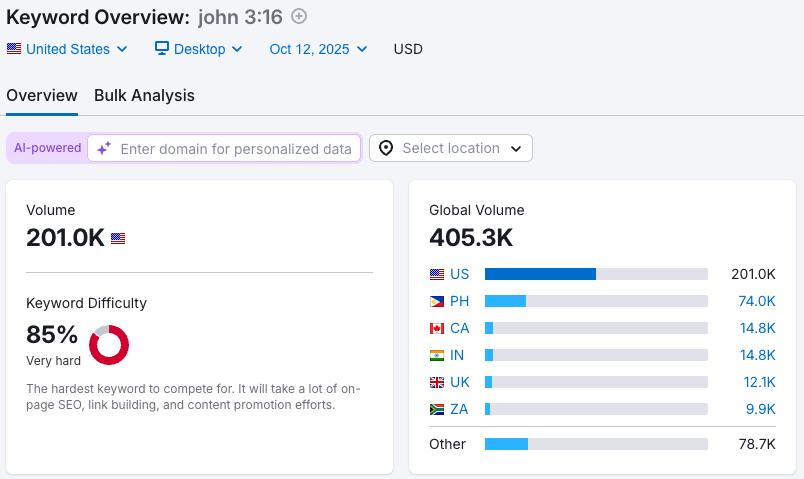
And that doesn't include alternatives like
- John 316
- John 3 16
Or any versions with questions surrounding it. It's safe to say over half a million people look up Christianity's most iconic Bible verse every month.
John 3:16 is one of the most (if not the most) cited Bible verses. So imagine someone Googling it, and they read what Google's interpretation of it is. Below was what showed up when I googled the verse.
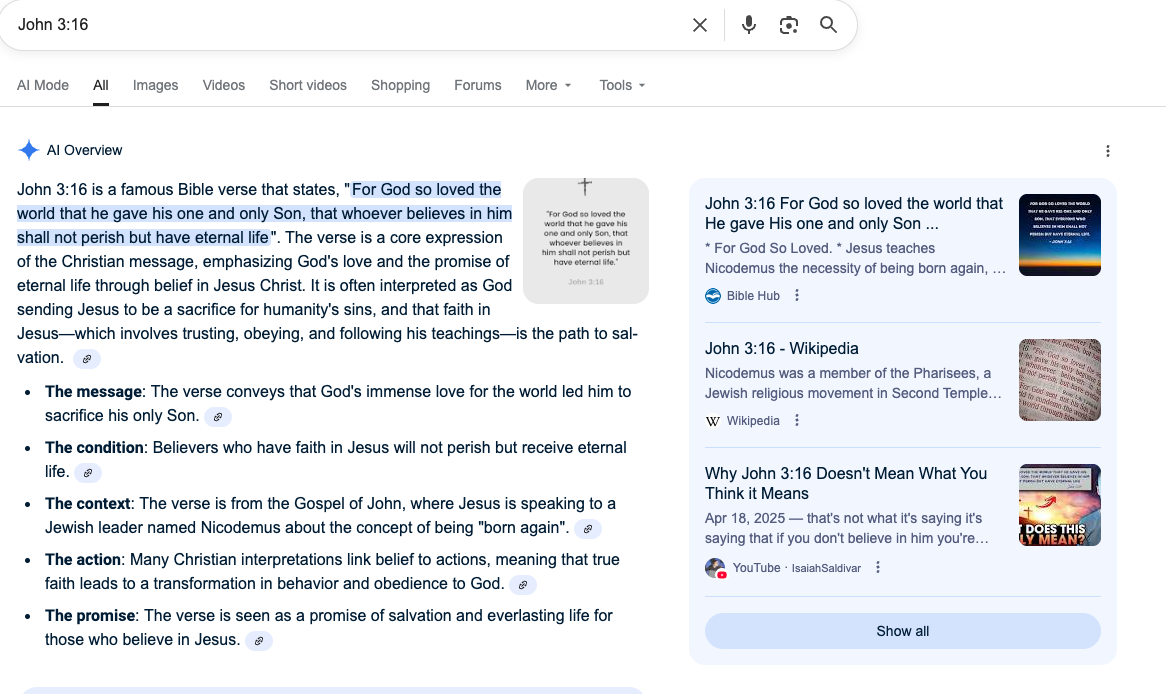
Sure, Google may pull from other sources, but who's to say that they are Biblical sources? That they aren't heretical or simply false. I added the word "meaning" and got one similar source.
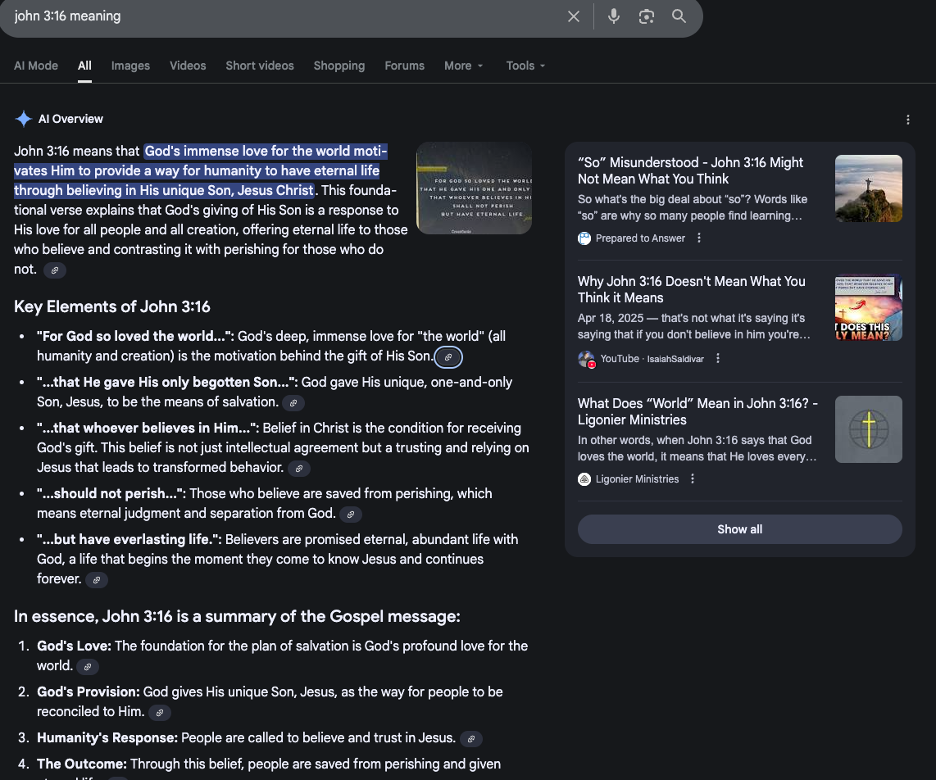
AI continues to advance, and there's never been a better time for churches to create content online that will help not only their congregation, but potentially millions. You could be in a small church of 50 people, but when you publish an article online, you could have a Billy Graham-caliber impact.
What Can Help You Show up in AI Overviews?
Ranking in AI Overviews isn't anything totally radical. The same fundamentals of SEO play a huge role in showing in AI Overviews. At the end of the day, the content has to be helpful.
That being said, I noticed a few things while writing this article.
Longtail Keyword Optimization
One of the ways you can make your content helpful + improve the chance to rank is by targeting longtail keywords.
Longtail keywords are phrases people search for instead of just one or two words.
For example:
- "Church near me" is a shorter keyword
- "Baptist churches in Fort Worth, TX" is a longtail keyword
Another example, as you can see from the article from Ligonier, they didn't just make the article title "John 3:16 meaning".
Instead, they made it a question. They made it something people would actually search, and it still matches the search intent (see next point).
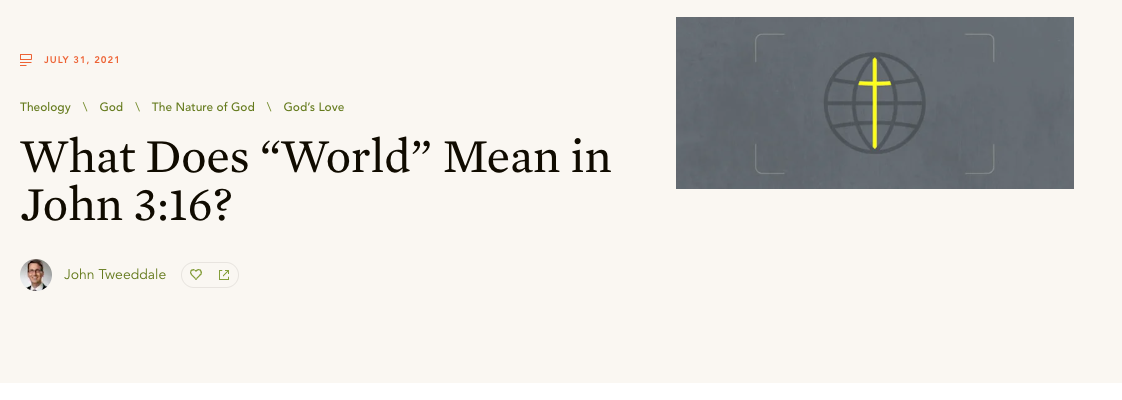
Having the exact keyword can be helpful. But in 2025, it's not required. Just look at the other titles of the results from earlier.
Matching Search Intent
Before you try to create on a bible verse, or verses, do a quick search to see what comes up for a particular piece of scripture.
The reason for this is that it'll give you an idea of what Google thinks the
intent is for that search.
I typed in a random verse in Leviticus and got the following results.
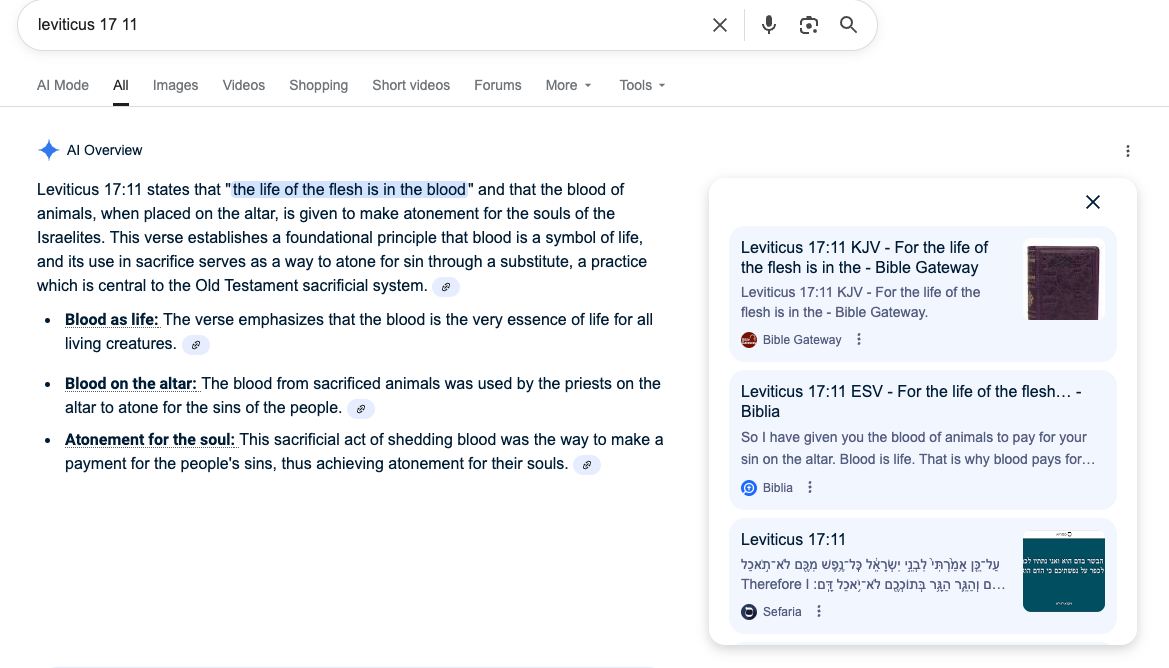
Instead of giving results from a church or YouTube, it gave more scholarly sources. That tells me that Google thinks when someone searches for Leviticus 17:11, they are looking to understand what the symbolism of blood means. So your content should match that intent.
Recency of Results
One study recently pointed to the recency of content being updated/published as a subtle ranking factor.
That doesn't mean old content is bad. But it does mean that you can leverage new, fresh content. I mean, look at the dates of what was cited by the AI Overview:
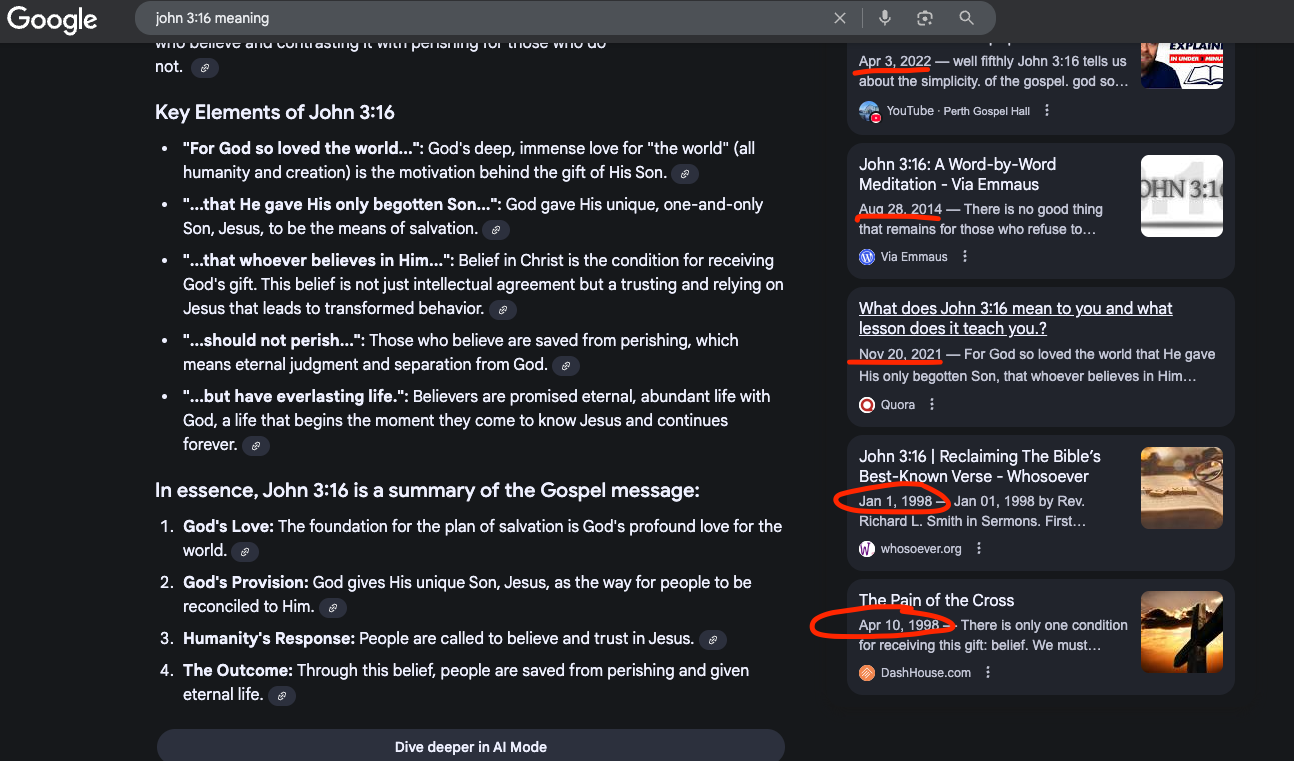
The dates range from January 1, 1998, to April 2025. I'm not saying that if you published a piece of content for "What does John 3:16 mean?" that it would rank. But I am saying that the newness can matter.
Platform Variety
You don't have to publish content on your website to show up in AI Overviews. When I googled one of my favorite verses, the top 3 results consisted of YouTube and Facebook (which surprised me). As of July 2025, Facebook and Instagram posts became searchable by Google.
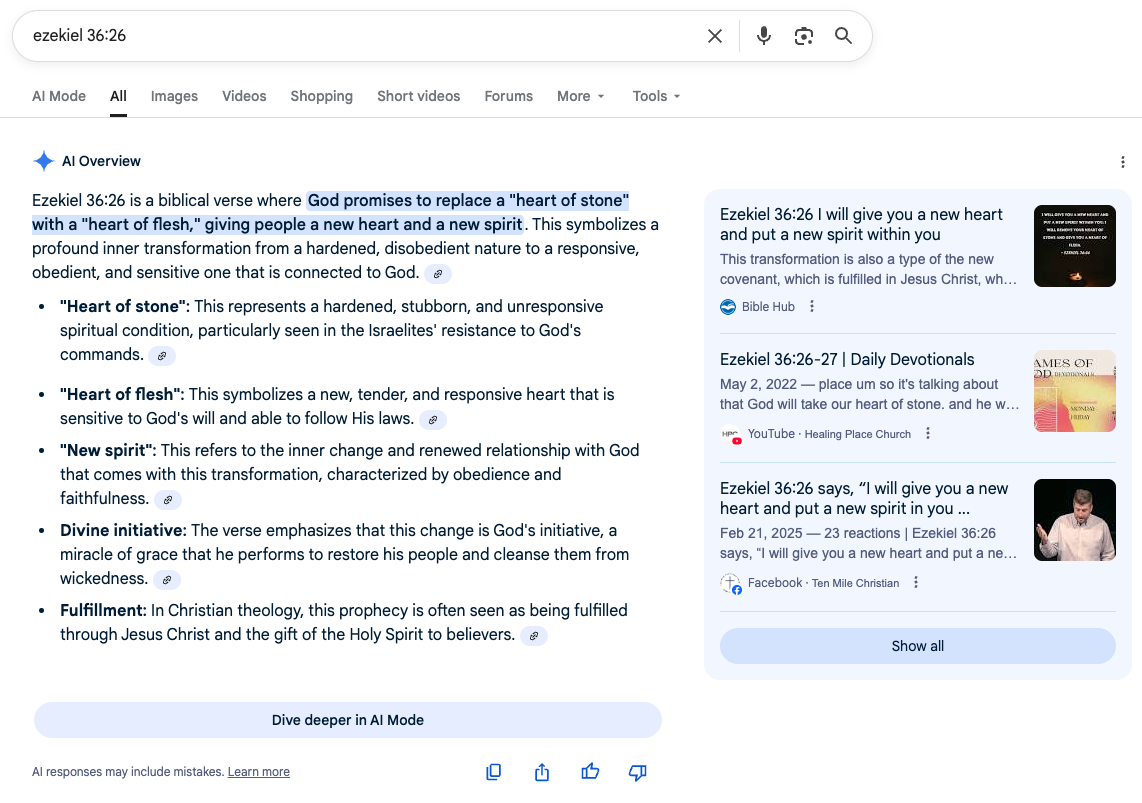
This means that no matter where the content is, you have a chance to show up somewhere for it.
Repurposing your content for other platforms helps expand your influence–SEO optimized or not.
Repurposed content is not
identical content. You have to edit to the platform people are on.
(While I don't do social media content or YouTube optimization, I'll be happy to refer you to people I trust with that. I work well with other specialists.)
Get Started Creating Christian Content for AI Overviews
There's never been a better time to create Kingdom-Advancing Content than now. There's never been a more critical time than now.
Whether you're looking to create content centered around specific Bible verses or need help repurposing your sermons, I'm here to help. You can
schedule a free call with me to get some ideas.
Find this helpful? Share with someone who would benefit!